Edelman Fossil Park and Museum
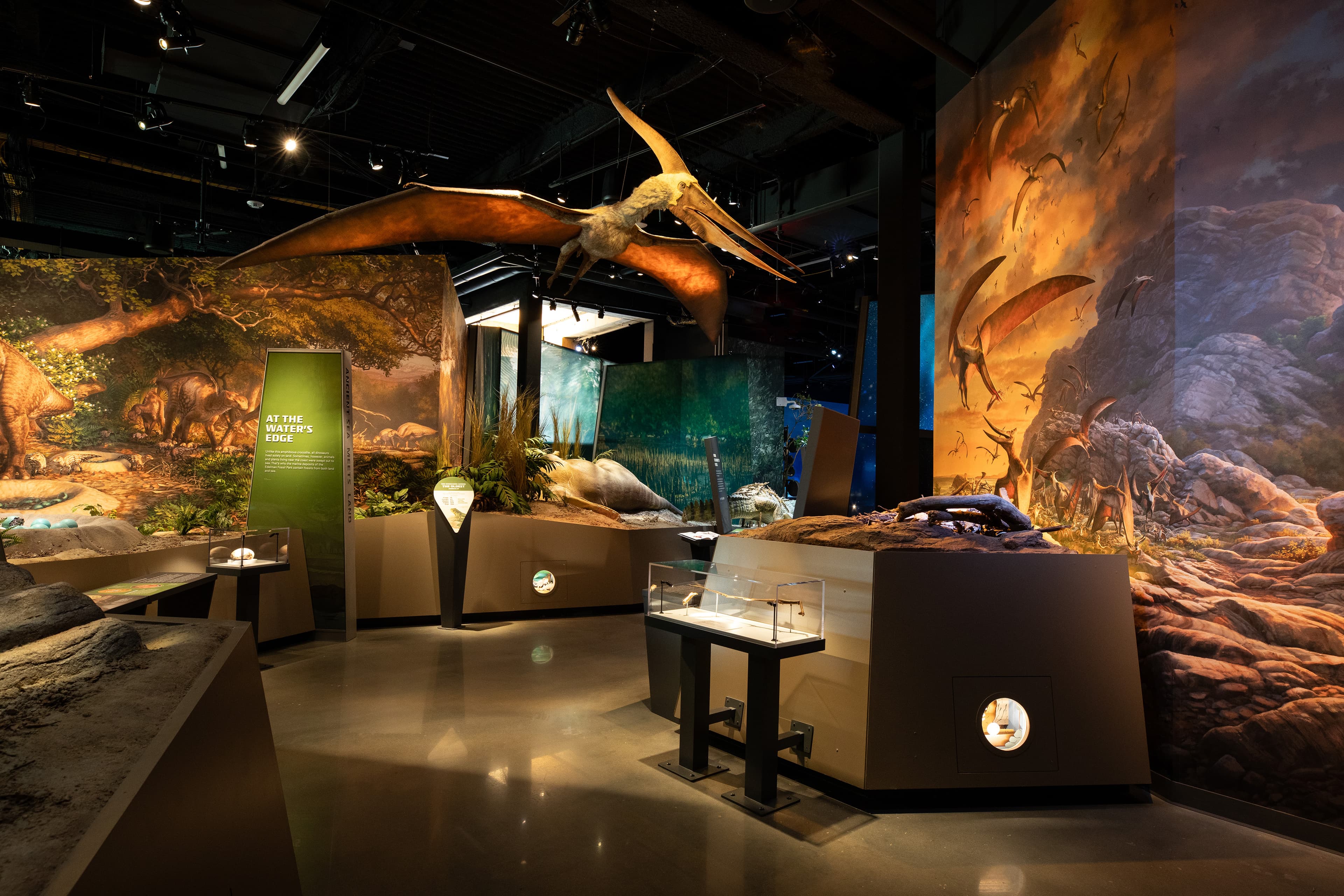
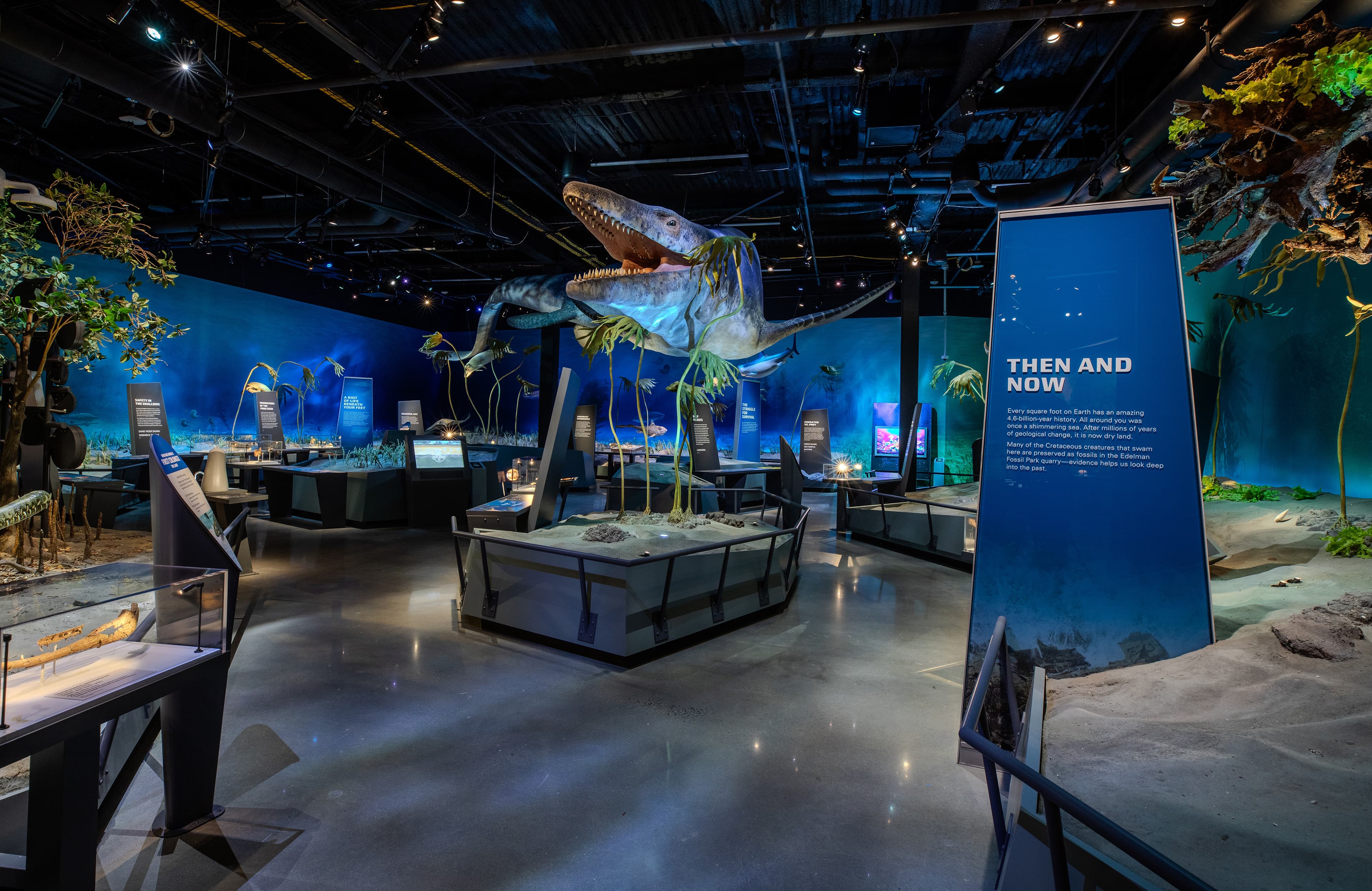
The Edelman Fossil Park and Museum at Rowan University transforms active, deeply technical paleontological research into an immersive experience that connects scientific discovery, education, and public engagement. Unlike traditional fossil museums that present artifacts in austere settings, this project sought to create a sequence of experiential immersive “locations” that transport visitors through environments of near extinction and renewal. Lighting facilitates this journey, guiding visitors through layered scientific narratives illustrating the life cycle of prehistoric creatures as they move from forest to shoreline to aquatic habitat.
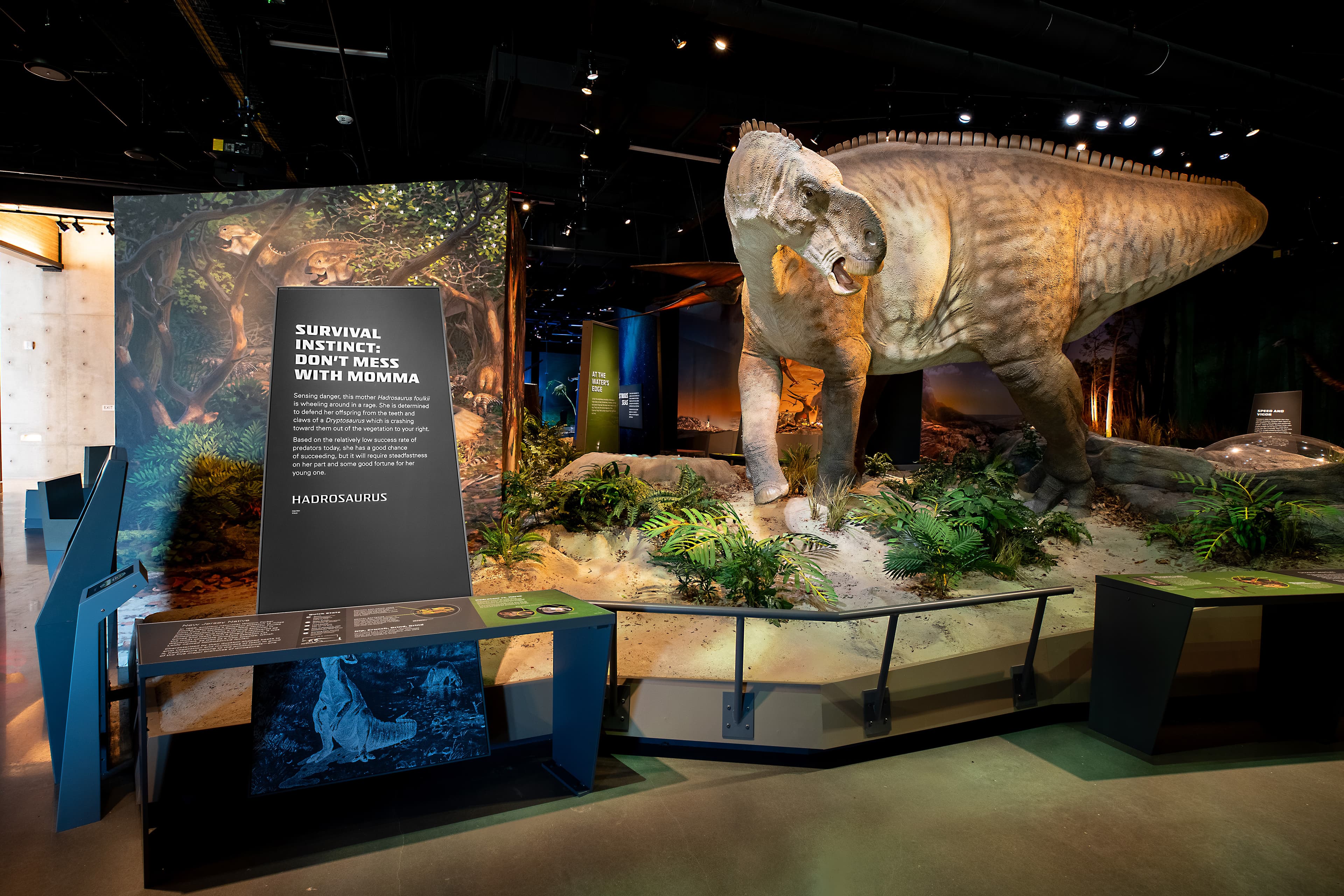
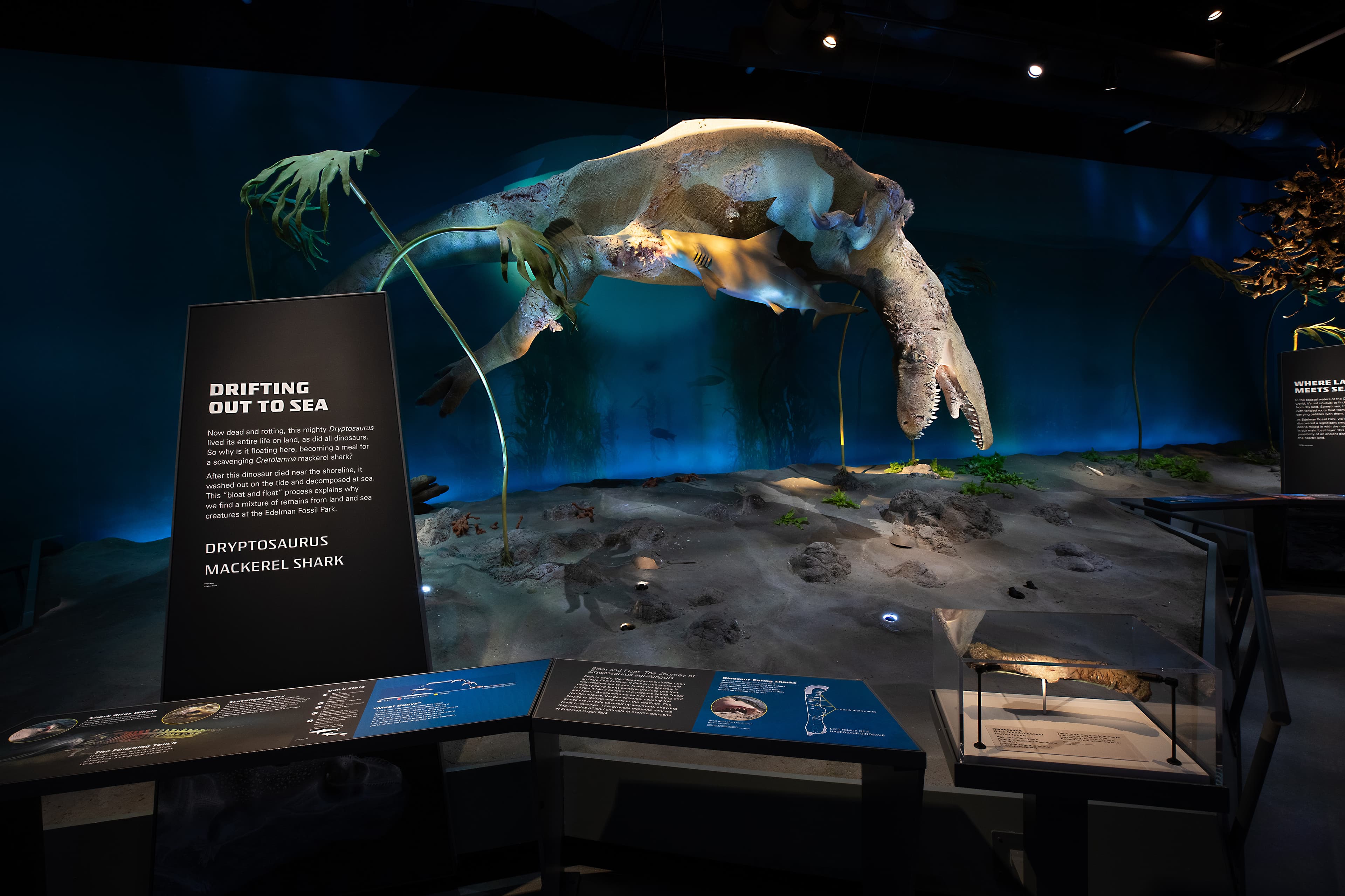
As visitors progress through the space, lighting reveals unfolding islands of learning. The experience transitions from a sumptuous green environment evocative of life above ground, to the aqua blues of submersion and marine ecosystems. Terrifying creatures nested in lushly beautiful settings bring this ancient history to life. Light scrapes across suspended 3D creatures, reinforcing their intimidating presence.
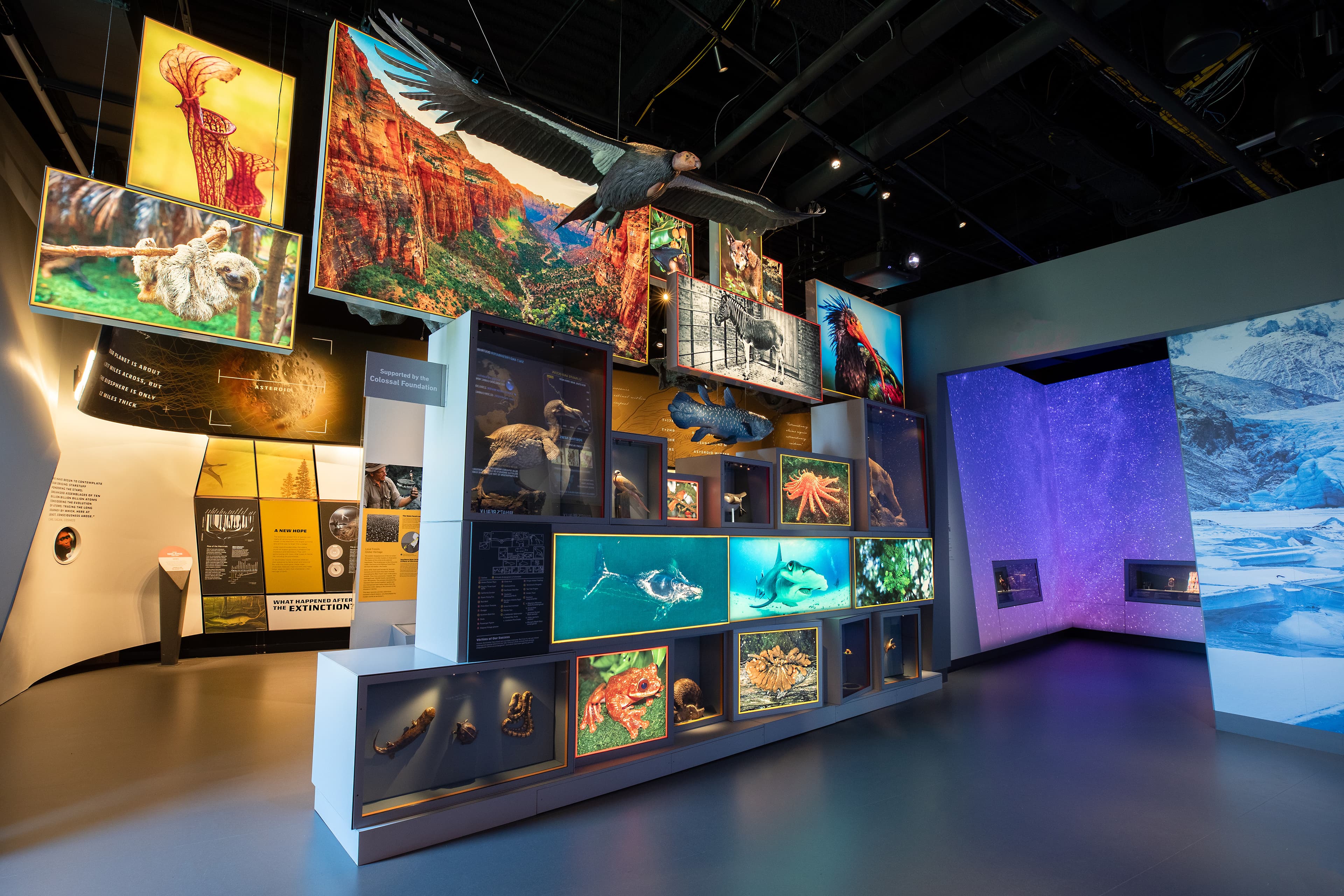
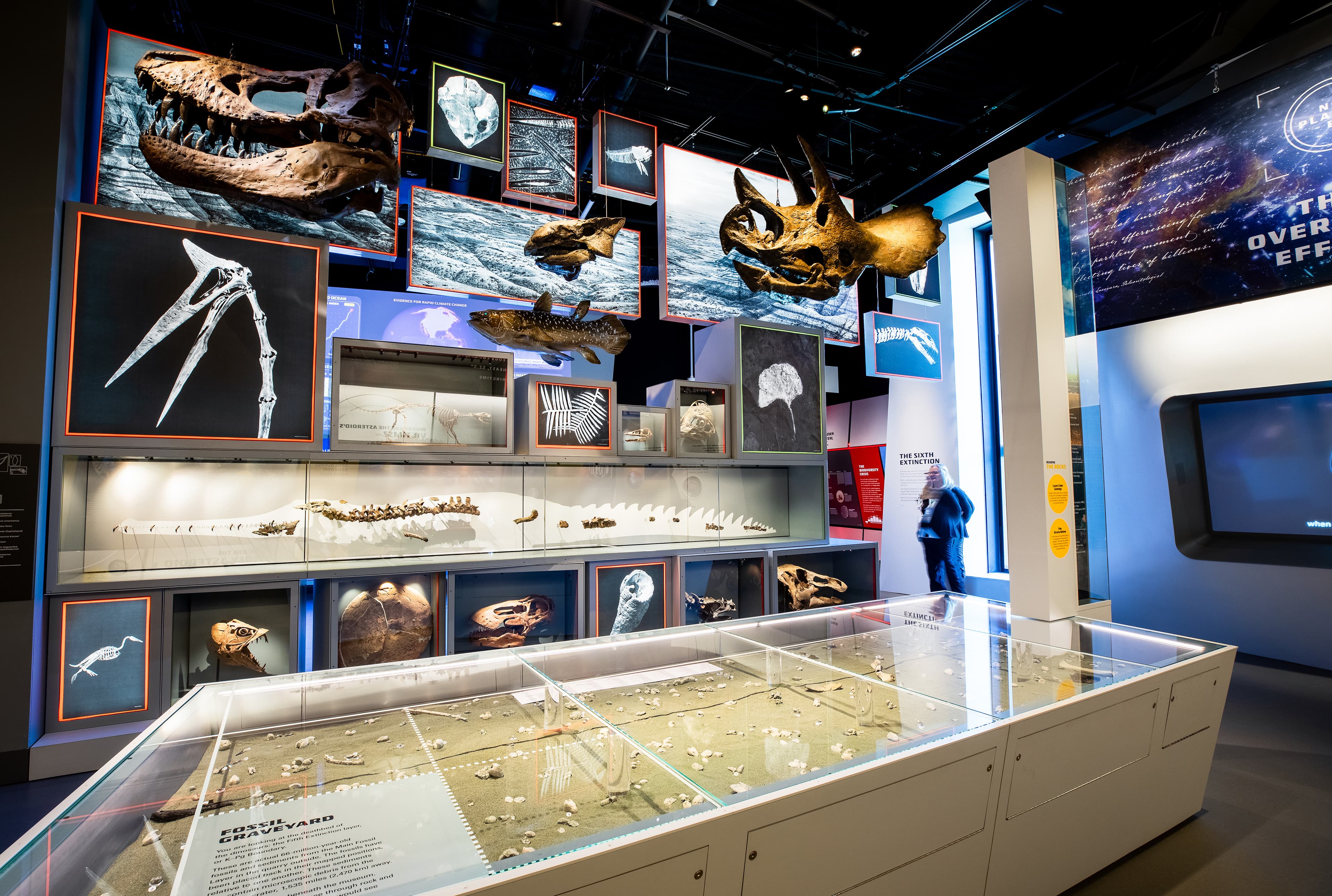
Lighting integration was central to the project’s success. Exhibit cases incorporate integral lighting, overhead track systems provide strategically focused illumination, suggesting mysterious, more atmospheric environments. Minimizing visual intrusion, lighting is concealed within architectural and exhibit elements, including platforms and custom-built structures. Early coordination enabled power and data to be embedded directly within structures, allowing precise fixture placement and easy access. Extensive in-situ mockups verified aiming angles, glare control, and visual balance across the 360-degree experience.
Highly granular controls synchronize lighting with media and interactive elements, most notably within the Extinction and Hope Object Theater, where dynamic lighting sequences push physical artifacts forward in time with projected content. All fixtures are discreetly dimmed to precise levels to achieve high contrast and maximum visual impact while also reducing energy consumption.
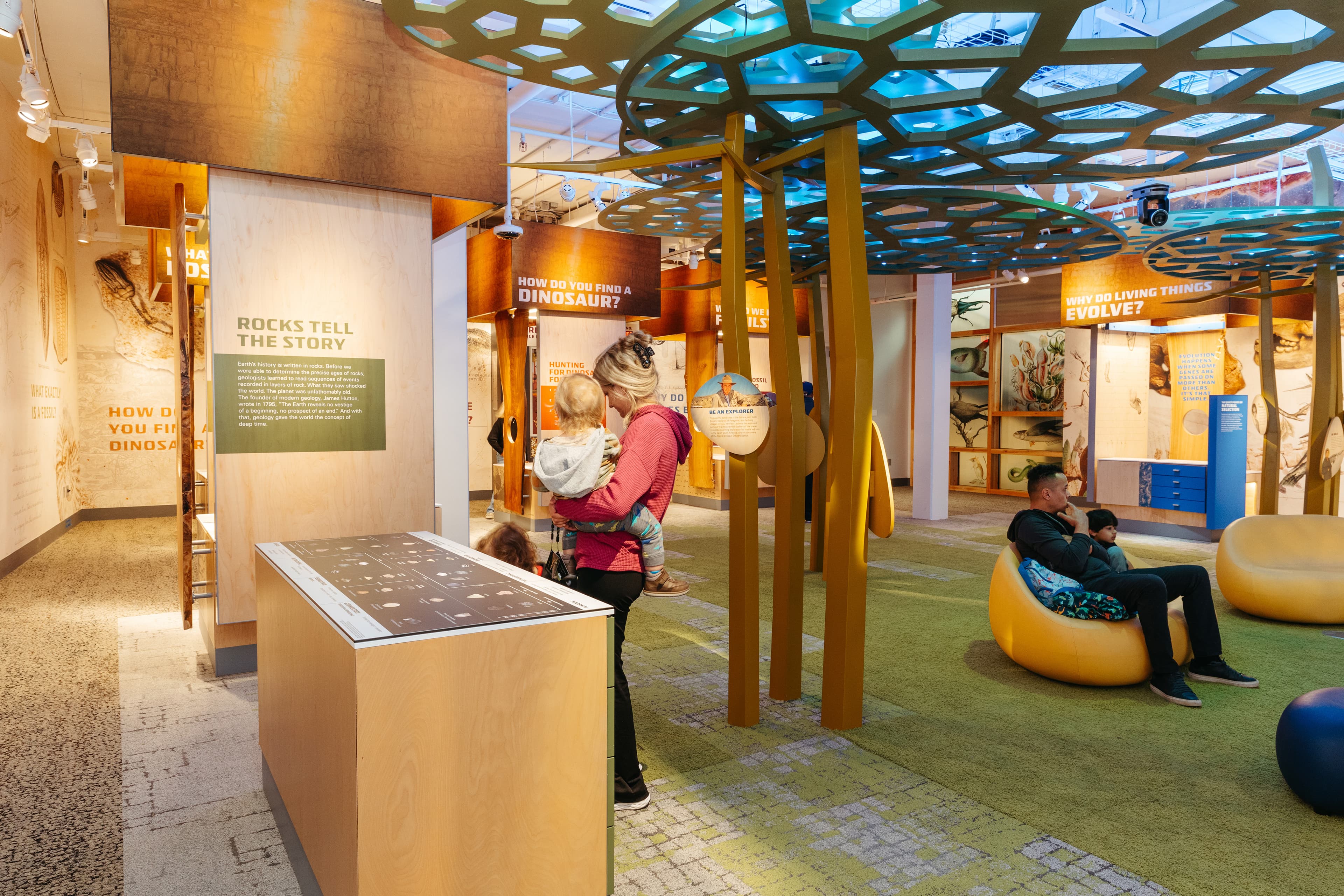
By presenting extinction through immersive environments rather than didactic displays, the lighting design helps frame climate change as a reverberating condition while inspiring curiosity about paleontology and related scientific careers.